
The Library and Memories
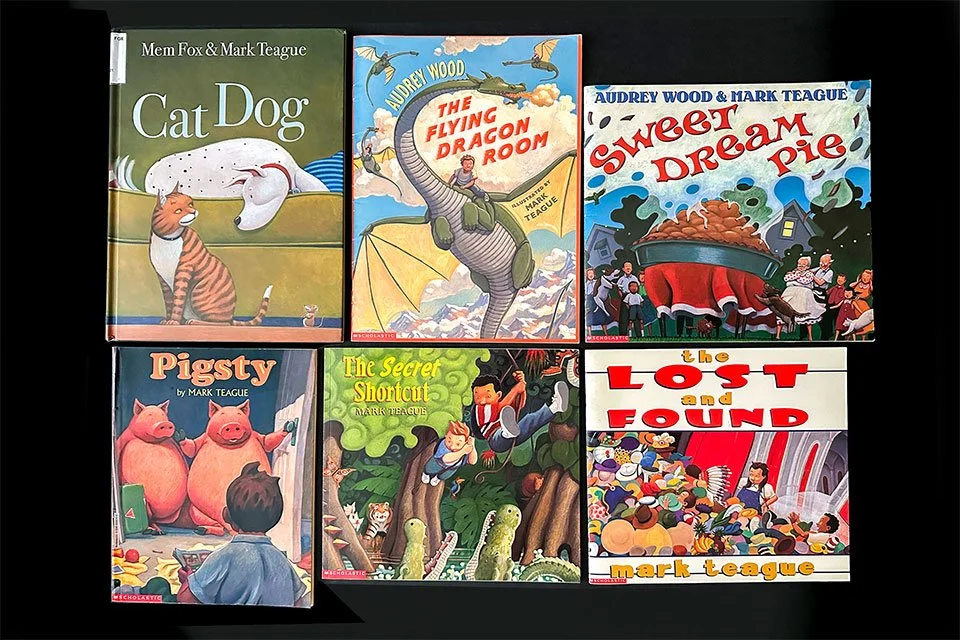
After a busy afternoon, I stopped by the library to pick up a book I had placed on hold. While wandering through the aisles, I noticed a special display featuring books about dogs. One children’s book immediately caught my attention because I recognized both the author, Mem Fox, and the illustrator, Mark Teague. The book was Cat Dog.
I paused to read it right there in the library. The story was short, simple, and beautifully illustrated—and it made me smile. Of course, I checked it out along with the book I originally came for.
Reading Cat Dog instantly brought back memories of reading aloud to my children when they were young. We loved books by Mem Fox and Mark Teague. His illustrations are colorful, expressive, and full of humor, while Mem Fox’s stories have warmth and rhythm that make them memorable for both children and adults.
On my bookshelf, I still have five children’s books illustrated by Mark Teague, including two written by Audrey Wood. Most were purchased through Scholastic book orders when my kids were in elementary school. Those little paper order forms arriving home from school were events in themselves—kids circling titles with excitement and eagerly waiting for the books to arrive.
Children’s Books That Stay With Us
Even after my children grew up, I never packed those books away. The stories and illustrations still bring joy, and every time I pull them off the shelf, memories come flooding back:
“Oh yes, I remember this one.”
“We read this story over and over.”
“These illustrations were our favorite.”
Some books simply become keepers.
Looking at Children’s Books as a Designer
Years later, after adding book design to my graphic design business, I began looking at children’s books with a designer’s eye as well as a reader’s heart. Those old favorites became valuable teaching tools when working with authors.
I often encourage authors to visit their local library—or browse books online—to study others in their genre. Research is an important part of the creative process. Pay attention to how successful authors and illustrators structure their stories, pace page turns, and balance text with imagery.
Children’s books, in particular, require thoughtful planning. A standard picture book is often thirty-two pages, including the title and copyright pages. Every spread matters.
The title page often acts as a visual “teaser,” encouraging the reader to turn the page. From there, the story unfolds through carefully designed spreads of left- and right-facing pages. Designers and illustrators must think about pacing, visual flow, and where the reader’s eye travels.
Text placement is another important decision. Should the words appear on the opposite page from the illustration? Or should the typography sit within an open area of the artwork itself? Designers must ensure that text remains readable without competing with the illustration.
And don’t forget the ending. The final page should leave readers with a satisfying close—whether it’s a memorable final illustration, a heartfelt dedication, or even a cleverly designed copyright page that reuses artwork from the story.
Books and Memories
I truly enjoyed stumbling across Cat Dog at the library. What began as a quick stop for a reserved book turned into a warm reminder of story time, bedtime reading, and the joy of sharing books with my children.
Some books do more than tell stories—they preserve memories.
What books do you remember reading to your children?