
Choosing the Future and Choosing the Right Category
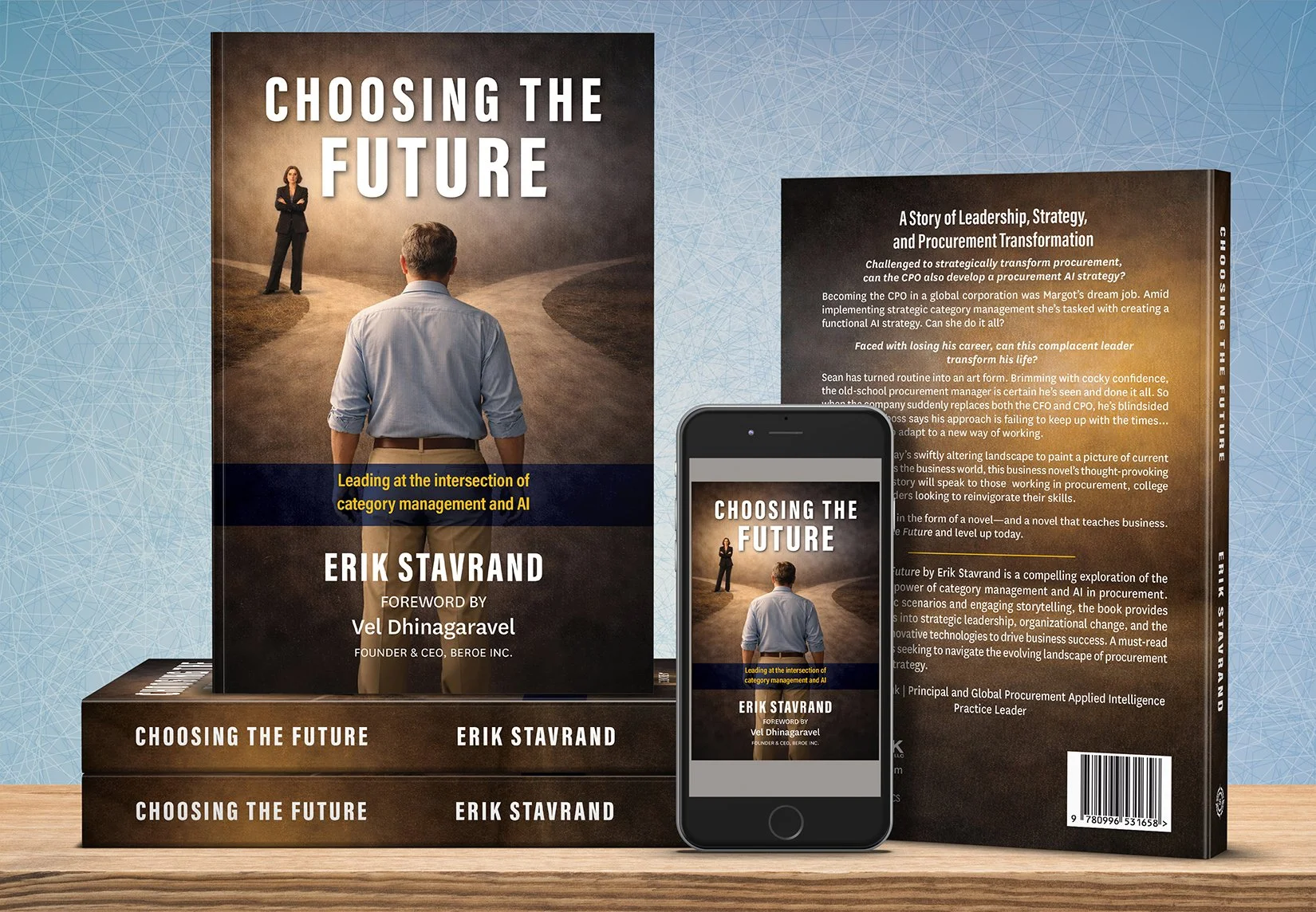
Erik Stavrand contacted me about designing his newest book, Choosing the Future. I had previously designed two nonfiction books for Erik, but this project was different—a novel about procurement transformation and category management. The book explores the real-world challenges of leading a category management team and the depth of procurement and organizational leadership required for success, all told through the format of a story.
Starting the Book Design Process
I asked Erik to send me comparable titles—books that would compete in the same genre. Most of the covers did not look like fiction (with the exception of Wing Walking). At first, I was unsure how a business story would fit into the marketplace.
The cover design also needed to balance the book’s dual identity. It had to feel professional enough for a business audience while still hinting that the book was story-driven rather than a traditional textbook-style guide.
In addition to being a long novel, this genre is extremely niche. There simply are not many business novels. That led to the biggest question of the project: What category would work best for this title—fiction or business?
A Helpful Reddit Discussion
While researching comparable titles and categories, I found an interesting discussion on Reddit:
“Does anyone else like business fiction? Any good recommendations here?
When I say ‘business fiction,’ I mean one of two things:
A business book that uses fiction as a teaching device.
A novel that teaches business principles as part of the plot.”
Those two points perfectly described Erik’s book, so I shared the post with him. He agreed immediately.
Choosing the Categories
After many months, the book layout was complete, but we still had not finalized the category selection.
Erik consulted a trusted advisor with expertise in Kindle Direct Publishing (KDP). Her recommendation was to lead with the business side rather than the fiction side. The primary category became Business (Purchasing and Buying), with a secondary category of Supply Chain Management.
She explained:
“Think about people who are looking for a book like yours—they will be looking to improve their purchasing skill set, not looking for a novel. The story format is what makes them pick your book over other more typical, dry, textbook-style books.”
The subtitle was also refined to better communicate the focus of the book: Leading at the Intersection of Category Management and AI
Refining the Book Description
I also asked ChatGPT for ideas on how to incorporate the phrase “business novel” into the book description. It generated several strong suggestions, and we ultimately added this sentence to the end of the description:
“A business book in the form of a novel—and a novel that teaches business. Buy Choosing the Future and level up today.”
It has been a pleasure working with Erik again. In the acknowledgments section of the book, he included a very kind compliment:
“Writing and publishing a book is a complex process. I am fortunate to have the support of Peggy Nehmen (n-kcreative.com). Peggy is much more than a talented designer; she knows all aspects of book publishing and is a tireless coach and cheerleader. Without her support, none of my books would have been completed.”
I truly appreciate Erik’s thoughtful words and the opportunity to collaborate on another meaningful project.
Every book presents its own unique challenges. In this case, the biggest design decision wasn’t the cover or the layout—it was determining how to position the book so readers could find it. From design and formatting to category selection and publishing guidance, every detail plays a role in a book’s success. If you’re planning a book project and need an experienced partner to help bring it to life, contact N-K Creative to discuss your next book.